Your first Glock: which model to buy in 2026
A first Glock is one of the safest bets in handguns: the design has been proven for four decades, parts and holsters are everywhere, and the manual of arms is the same across the line. The hard part is choosing among more than forty models. This guide narrows it to a few sensible first pistols, explains what to budget, and lists the accessories that matter on day one.
Start with the job
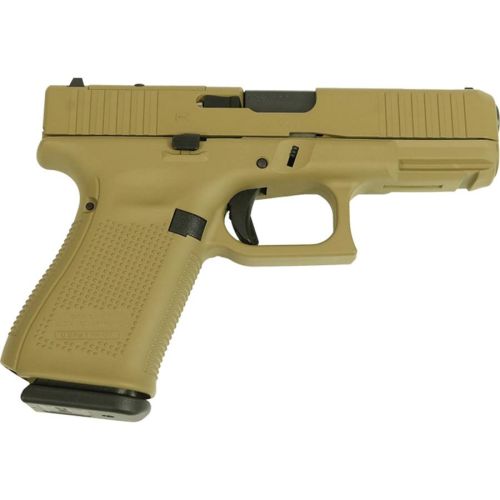
Ask what the pistol is for. Home defense and range practice favor a full-size or compact frame you can grip fully. Everyday carry favors a compact or slimline gun that disappears under a shirt. A pistol that will do both should be a compact. Most first-time buyers land on the Glock 19 for exactly that reason: it is small enough to carry and big enough to shoot well, and it is the model most instructors teach with.
The short list
- Glock 19 Gen 5: the default. 15 rounds of 9mm, 4.02 inch barrel, fits most hands, and more holsters and parts exist for it than for any other pistol.
- Glock 48: the thin alternative. Same barrel length as a 19 within a slimmer 10-round frame, easier to conceal and gentler on smaller hands.
- Glock 17 Gen 5: if the pistol will live in a nightstand safe or go to matches, the extra grip and 17 rounds are welcome.
- Glock 43X: for the buyer who will carry every day and wants the smallest gun that still has a full grip.
- Glock 44: a .22 LR trainer for learning fundamentals cheaply; pair it with a centerfire model later.
MOS or not
MOS pistols come with the slide cut for a red dot sight and a set of adapter plates. A dot makes accurate shooting easier to learn and is the direction most of the industry is heading, but it adds the cost of the optic and asks you to learn to find the dot on the draw. If you plan to shoot with a red dot within the first year, buy the MOS version now; milling a standard slide later costs more than the difference in price. If iron sights are the plan, the standard model is simpler and slightly cheaper.
Generation
Buy Gen 5 for a first pistol unless you live in a roster state. It has the better trigger from the box, no finger grooves to fight, an ambidextrous slide stop and the improved barrel. A Gen 3 or Gen 4 at a discount is not a mistake, particularly a lightly used police trade-in with night sights already fitted. The generations guide has the details.
Budget
Plan for the pistol, the dealer transfer fee, and the first few hundred rounds of practice ammunition. Add a quality holster from a maker who molds for your exact model, a second or third magazine, a small safe or lockbox, and eye and ear protection. A red dot, if you go MOS, is a separate line: reliable dots start at a few hundred dollars and the cheapest ones are not worth mounting. Skip trigger upgrades, slide work and grip mods until you have a thousand rounds through the stock pistol; most of what a beginner thinks is a gun problem is a grip problem.
Ammunition
Practice with 115 or 124 grain full metal jacket 9mm from any major maker. Carry or keep at home a jacketed hollow point from a load with a track record, such as the 124 grain +P or 147 grain offerings from the big ammunition companies, and shoot at least a box of it to confirm it feeds. Glock barrels are safe with jacketed and plated bullets; bare lead should be avoided in the factory polygonal barrels of Gen 4 and earlier.
Left-handed and small-handed shooters
Gen 5 Glocks have a slide stop on both sides and a magazine catch that reverses in a minute with a punch, so a left-handed shooter loses nothing. Gen 4 pistols have the reversible catch but a right-side-only slide stop. For small hands, the Gen 5 pistols without a backstrap fitted have a shorter trigger reach than any earlier generation, and the slimline Glock 43X and 48 are shorter still. Try the trigger reach with an unloaded pistol: the pad of your index finger should sit on the trigger without the grip twisting in your hand. If it does not, go one frame size smaller or one grip thinner rather than fighting it.
Storage from day one
Plan where the pistol will live before it comes home. A quick-access lockbox by the bed keeps a home-defense Glock ready and away from children and guests; a small safe holds the spare magazines and the ammunition. Several states now require secure storage when a minor could reach a firearm, and a lockbox is cheaper than the fine. Store the pistol with a chambered round only if it is in a holster or a box that covers the trigger.
The first range trip
Field strip and clean the pistol before you shoot it, then run a box of ammunition to confirm function. Take a basic pistol class if you have not shot before; the difference between a class and a video is the instructor correcting your grip in real time. Learn the pistol's three safeties and the fact that it has no manual safety lever, which is why holster choice matters so much: the trigger must be covered whenever the pistol is on your body.
Buying online
The pistol ships to a licensed dealer near you, where you complete the background check and any state paperwork; the process is laid out in how to buy a Glock online. Parts, magazines and holsters ship to your door. Compare models in the model size guide, pick a caliber with Glock calibers compared, and browse current listings in pistols. Find your state's rules on our city pages.
General information, not legal advice. Current as of September 2026. Laws change; check the official source before you act.